Tally
A speculative project that reimagines how we measure political success in the UK, measuring what matters to people beyond GDP.
The Challenge
I wanted to explore how complex government data and policy outcomes could be made more understandable, emotional, and accessible. Time was a challenge, as I was juggling multiple live briefs alongside this solo project. I also had to push myself visually, as building a clear identity system from scratch isn’t something I usually enjoy- but I found myself connecting with the outcome as it developed.
The Result
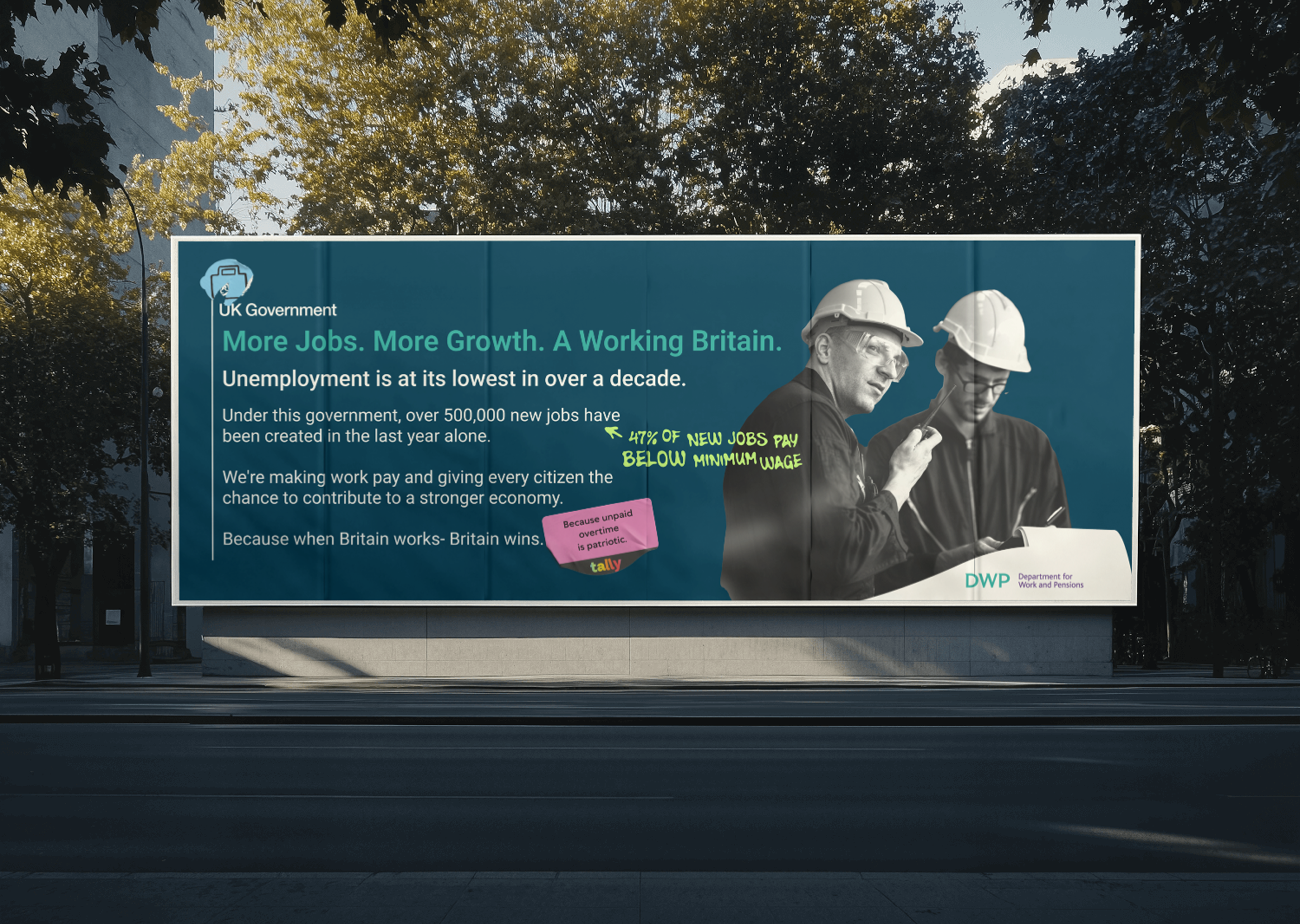
The final project includes a campaign identity, posters, sticker packs, speculative government interventions, and a microsite mockup. The visual language, lino-printed icons and tone of voice all work together to create something that feels bold, honest, and people-first. Tally helped me define my interest in service design and civic communication, and showed me how design can make abstract systems feel more human.
Measuring What Really Matters
Tally is a speculative, self-initiated project exploring alternative ways to evaluate national progress. Rather than focusing solely on gross domestic product (GDP), the project proposes six human-centred pillars:
- Quality Education
- Access to Healthcare
- Job Security
- Access to Shelter
- Wellbeing and Happiness
- Food Security
“What would happen if we measured what matters to people, rather than abstract fiscal spreadsheets?”
Visual Language & Lino Printing
To give the campaign a tangible, grounded warmth, each icon category was hand-carved in linoleum and hand-printed before digital vectorisation. This human imperfection contrasts with the sterile aesthetics often associated with government white papers and fiscal reports.
* Touchpoint 1: The "People's Budget" Summary Sheet
* Touchpoint 2: Street-level voting prompts and ballot sticker packs
* Touchpoint 3: Interactive civic telemetry dashboard
The outcome demonstrates how speculative design can be applied to complex civic systems to spark meaningful public dialogue.